
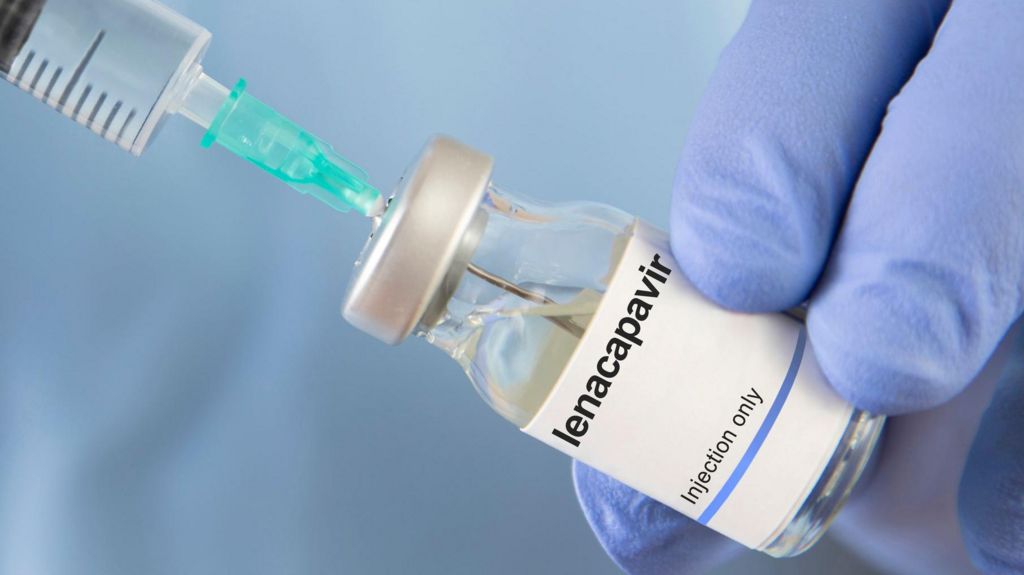
Researchers at Gilead Sciences have stated that although HIV is capable of developing resistance to the injectable drug lenacapavir, such development often results in serious losses in the virus’s ability to reproduce.
Lenacapavir is an innovative antiretroviral drug, first approved in 2022, which is administered twice a year and targets the virus’s capsid protein, blocking its replication. It is used both for HIV prevention and for the treatment of strains that are resistant to other drugs. In clinical trials and laboratory experiments, researchers have recorded cases of mutated forms of the virus that could resist the action of lenacapavir, but such cases were rare.
A new study, published in Science Translational Medicine, showed that when the virus does develop resistance to this drug, it often comes at the “cost” of a significant reduction in its ability to replicate. For example, the M66I mutation associated with resistance reduced the virus’s replication ability to 17% compared to normal, and the subsequent accumulation of other mutations partially restored it, but only to about 34%. This means that although the virus can mutate, these disputes are far from perfect and make it less “powerful.”
The main risk factor for the emergence of such resistant variants remains poor adherence to treatment regimens: lenacapavir is administered twice a year, but for effective therapy, patients must also take other antiretroviral drugs daily. If these pills are missed, the virus has more opportunities to adapt.
Experts from Harvard Medical School who were not involved in the study emphasize that resistance to lenacapavir is a “moving target”: it can change over time depending on how the virus evolves and how treatment is applied in reality. This underscores the importance of continuous monitoring and testing for resistant strains and careful use of concomitant antiretroviral drugs.
The authors of the study also note that their findings may help in the development of future drugs with even better resistance profiles, as the main task of scientists is to “stay one step ahead” of the virus.
It should be noted that starting in 2027, injectable lenacapavir will be available at a price of only $40 for a year’s course in low- and middle-income countries. This decision is already being called a turning point in the global fight against the HIV/AIDS epidemic.